Card Foundations
How Many Tarot Cards Are There? The 78-Card Deck Explained
The standard tarot deck has 78 cards. Here is how its Major and Minor Arcana fit together and how to explore the structure without memorizing it all at once.
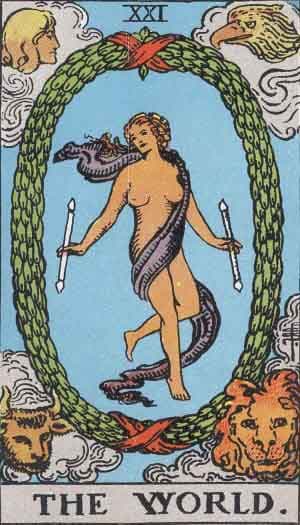
A standard tarot deck has 78 cards: 22 Major Arcana cards and 56 Minor Arcana cards. That number is easy to remember, but it does not tell you how the deck works. The Major Arcana offers large archetypal scenes, while the Minor Arcana breaks daily life into four suits, numbered progressions, and court cards. Understanding that shape helps you browse card meanings, recognize patterns in a spread, and avoid the pressure of trying to memorize every card on day one.
The short answer: 78 cards in a standard deck
The deck used by many contemporary readers has 78 cards. The Major Arcana contains 22 cards, usually numbered from 0 through 21. The Minor Arcana contains 56 cards: 14 cards in each of four suits. A deck can vary in illustration, title wording, cultural lens, or the ordering of some cards, yet this 22-plus-56 structure is the common foundation for the Rider-Waite-Smith family and many modern decks.
| Deck group | Number of cards | What it often explores |
|---|---|---|
| Major Arcana | 22 | Large themes, identity, thresholds, values, and transformation |
| Minor Arcana | 56 | Everyday experiences, relationships, work, thoughts, feelings, and material life |
| Each Minor suit | 14 | Ten numbered cards plus Page, Knight, Queen, and King |
| Total | 78 | A flexible visual language for reflective reading |
The 22 Major Arcana cards
The Major Arcana begins with The Fool, commonly numbered 0, and ends with The World, numbered 21. Between them are familiar figures and scenes such as The Magician, The High Priestess, Strength, The Hermit, Death, Temperance, The Moon, The Sun, and Judgement. Readers often turn to these cards when a spread seems to touch a larger transition, a deep value, or an enduring personal theme. A Major Arcana card is not automatically more important than every other card. Its meaning depends on the question, position, neighboring cards, and the reader’s real circumstances.
Ways to approach a Major Arcana card
- Look at the scene first: who has power, who is moving, and what is changing?
- Ask what human experience the image makes easier to name, such as solitude, responsibility, uncertainty, or renewal.
- Connect it to the spread position before assuming it gives a universal message.
- Use a card reference to learn common associations, then test them against your actual situation.
Worked example
A Major Arcana card in context
You draw The Hermit in a three-card spread about a busy period at work.
“What would help me regain perspective?”
- 1
Avoid the shortcut
The Hermit does not require you to quit your job or withdraw from everyone. A single card cannot make that choice for you.
- 2
Read the image
The lantern, mountain, and solitary figure may invite reflection on attention, pace, expertise, or the value of a quieter hour.
- 3
Make it practical
You could protect a focused block of time, seek advice from one experienced colleague, or take a walk before answering a difficult message.
Takeaway: A Major Arcana card can give a broad theme a practical shape when you keep the question and your agency in view.
The 56 Minor Arcana cards
The Minor Arcana is divided into four suits: Wands, Cups, Swords, and Pentacles. Each suit has cards numbered Ace through Ten, followed by Page, Knight, Queen, and King. These cards can make a reading feel specific and grounded. A Five of Pentacles may lead you to think about support, scarcity, or practical security. A Page of Cups may bring attention to a feeling, invitation, or emerging creative response. Their value comes from how they connect to the question and other cards, not from a fixed prediction.
| Suit | Common themes | Everyday questions it can open |
|---|---|---|
| Wands | Energy, initiative, creativity, ambition, and direction | Where am I ready to begin or overextended? |
| Cups | Feelings, relationships, imagination, and receptivity | What needs care, expression, or emotional honesty? |
| Swords | Thought, communication, conflict, and decisions | What conversation or belief needs clarity? |
| Pentacles | Work, body, home, money, skills, and resources | What practical support would make this steadier? |
The numbers give each suit a sense of movement. An Ace often introduces potential or a first spark; middle numbers can show development, friction, cooperation, or adjustment; Tens can suggest a culmination, burden, completion, or transition. Court cards can be read as people, roles, attitudes, or ways of relating to the suit. There is no need to force one method. Begin with the image and your question, then use these patterns to widen your interpretation.
Why are there four court cards in every suit?
Every Minor Arcana suit ends with a Page, Knight, Queen, and King. Together, they add 16 court cards to the deck. Older traditions sometimes use different names, and readers differ on how literally to treat them. A court card may point to a person in your life, but it can also describe a skill, mood, responsibility, or stage of learning. The Page might suggest curiosity or a new message. The Knight can show motion and pursuit. The Queen and King can describe mature ways of holding the suit’s energy. Gendered titles do not have to limit who a card can describe.
Do all tarot decks have 78 cards?
Many tarot decks keep the standard 78 cards, even when the artwork is radically different. Some traditions place Strength and Justice in a different numerical order. A deck may rename suits, reinterpret court cards, or include an extra card intended as an optional companion. These changes can be meaningful within that deck’s guidebook, but they do not make the basic structure unknowable. Start with the deck in front of you: read its introduction, notice its suit names, and check whether the creator describes any departures from the standard system.
A quick way to identify your deck
- Count the cards or check the accompanying guidebook.
- Look for 22 Major Arcana cards and four groups of 14 Minor Arcana cards.
- Notice whether Wands, Cups, Swords, and Pentacles have been renamed.
- Treat extra cards as optional until you understand how the creator intends them to be used.
Learn the 78 cards without turning it into a test
A calm way to learn the deck
- 01
Learn the four suits first
Spend a few days noticing how Wands, Cups, Swords, and Pentacles differ in image and subject matter. This gives you a framework for every Minor Arcana card.
- 02
Read one Major Arcana card at a time
Browse the image, read a short reference, and write one question it brings up for you. You do not need to recite a keyword list.
- 03
Use small draws
One-card and three-card readings give you enough room to observe without drowning in meanings. Return to the card library whenever you need a factual reference.
- 04
Review your notes
A journal lets you notice which images and themes recur in your real life. This is more durable than trying to memorize isolated definitions.
The 78-card deck is large enough to stay interesting and small enough to learn gradually. Let the structure orient you, then let careful observation do the rest. You are building a language for reflection, not preparing for an exam and not surrendering your decisions to a deck.
Sources and method
References used for the factual backbone.
TaroMind separates historical and structural facts from reflective interpretation. Sources support deck history and organization; practical prompts remain educational suggestions.
- The Pictorial Key to the Tarot
Internet Sacred Text Archive
A public-domain historical text documenting the Major and Minor Arcana card structure.
- Tarot
Encyclopaedia Britannica
Historical background on tarot cards and their development.
Put the guide into practice
Explore the 78-card library
Browse Major and Minor Arcana cards with public meanings and card imagery.
Explore the 78-card libraryContinue exploring