Reading Practice
Tarot Suits Explained: Wands, Cups, Swords, and Pentacles
The four tarot suits offer a practical map for energy, feeling, thought, and material life. Use them to notice patterns without reducing a reading to a fixed formula.
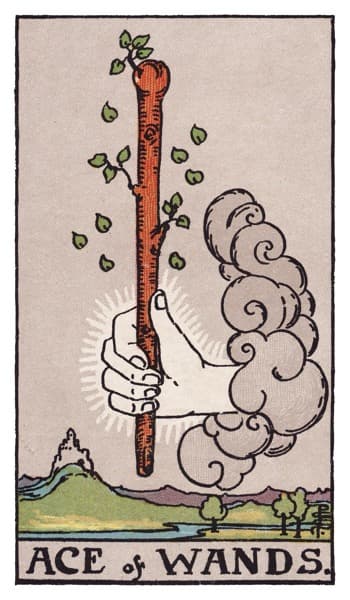
Tarot suits are the four branches of the Minor Arcana: Wands, Cups, Swords, and Pentacles. Each suit has its own visual world and set of common associations. Wands often bring energy and initiative into focus. Cups invite attention to feeling and connection. Swords can illuminate thought, communication, and conflict. Pentacles tend to point toward work, the body, home, money, and material support. These are starting points, not a code that predicts your future. The real work is noticing how a suit appears in the question and spread in front of you.
Why tarot suits matter in a reading
The Minor Arcana contains 56 cards, so the suits provide a useful first map. When several cards from one suit appear, they may show where your attention is gathering. Three Pentacles might make collaboration, skills, or shared resources worth examining. Several Cups may make feeling and relationship central. A suit does not diagnose your life or hand down a verdict. It helps you ask a better question: what part of this situation am I overlooking, overemphasizing, or ready to support?
| Suit | Common element | Common themes | A grounded question |
|---|---|---|---|
| Wands | Fire | Energy, creativity, desire, initiative, and purpose | Where do I need to begin, direct, or protect my energy? |
| Cups | Water | Feelings, connection, imagination, and receptivity | What feeling or relationship needs honest attention? |
| Swords | Air | Thought, communication, truth, conflict, and choices | What needs clearer language or a more balanced perspective? |
| Pentacles | Earth | Work, health, home, money, skills, and resources | What practical support would make this more sustainable? |
Wands: energy, desire, and direction
Wands are commonly associated with fire, which makes them a useful place to explore momentum, creativity, enthusiasm, purpose, and the way you direct your effort. Their scenes can feel active: people carry staffs, look toward a horizon, defend a position, or build something into being. In daily life, Wands may connect to a project, a risk, a skill you want to develop, a burst of motivation, or the feeling that you have taken on too much at once.
Questions Wands can open
- What am I genuinely excited to begin or continue?
- Where am I confusing busyness with purposeful action?
- What boundary would protect my creative energy?
- What small experiment would tell me whether this direction fits?
When Wands dominate a spread, you may be in a season of ideas, action, competition, or expansion. That can feel energizing, but it can also reveal impatience or burnout. Instead of reading fire as a command to move faster, ask what deserves your energy and what can be put down. A practical plan, rest, or a conversation with a collaborator may be the most useful expression of a Wand card.
Cups: feeling, relationship, and receptivity
Cups are often connected with water, emotion, relationships, imagination, memory, and the capacity to receive. Cup scenes may show an offered cup, shared celebration, disappointment, nostalgia, or an overflowing response. In a reading, they can help you notice a feeling that is already influencing a choice. They can also turn attention toward consent, friendship, grief, hope, intimacy, or the stories you attach to a relationship.
| What you notice | A reflective interpretation | A possible action |
|---|---|---|
| Many Cups in one spread | Emotion and connection may be central to the situation | Name the feeling before solving the logistics |
| An offered or raised cup | An invitation, exchange, or openness may matter | Ask what kind of response feels honest and safe |
| A spilled or empty cup | Loss, disappointment, or unmet expectation may need space | Acknowledge what hurts before forcing optimism |
| A calm water scene | There may be room for listening and imagination | Make time to reflect without demanding an immediate answer |
Swords: thought, language, and tension
Swords are often linked with air. They can bring attention to thinking, communication, perspective, truth, disagreement, and the pressure of making a choice. Their imagery is sometimes sharp or intense, which leads beginners to assume every Sword card is bad news. A more useful view is that Swords show where language and thought carry weight. A difficult card may invite you to name a conflict, question an assumption, ask for clarity, or stop rehearsing a painful story in isolation.
When Swords appear, pause with these questions
- What facts do I know, and what am I assuming?
- Is there a conversation I am avoiding or a boundary I need to state?
- What would a fairer version of this story sound like?
- Do I need to decide now, or do I need more information first?
A spread with many Swords can be a useful cue to slow down. Write the decision on paper, separate evidence from interpretation, and ask someone trustworthy to reflect it back to you. When stress, anxiety, or a crisis is present, support from a qualified professional can be more important than any card meaning. Tarot can accompany reflection; it should not become the only place you seek help.
Pentacles: resources, skills, and steady care
Pentacles are commonly associated with earth. They often bring the physical and practical side of life into focus: work, money, home, health routines, craft, time, tools, and shared resources. A Pentacle card does not reduce everything to finances. It can ask what makes something sustainable, what you are building, where you need support, or how your body is responding to the pace you keep. Their scenes often reward patient observation because material life tends to change through repeated choices rather than one dramatic leap.
Practical prompts for Pentacles
- What resource, skill, or routine would support me this week?
- Where do I need a clearer budget, timeline, or agreement?
- What has grown slowly because I have kept showing up?
- What form of care would make this goal more sustainable?
If Pentacles fill a reading, return to the concrete world. Check your calendar, make the appointment, organize the documents, ask about pay, rest, cook a meal, or practice the skill. The card’s symbolic language becomes more useful when it points toward a doable piece of care.
How numbers move through every suit
Each suit moves from Ace to Ten, then through Page, Knight, Queen, and King. The number does not have one fixed definition across the deck. It gives you a way to notice development. An Ace can suggest a seed, opening, or concentration of the suit. Middle numbers may show choice, friction, cooperation, adjustment, or momentum. Tens can portray fullness, completion, burden, or a point where a pattern needs to change. Compare the number with the suit and image instead of memorizing a single sentence for each card.
| Part of the sequence | A question to explore |
|---|---|
| Ace | What is beginning, becoming clear, or asking for attention? |
| Two to Four | What balance, choice, foundation, or tension is emerging? |
| Five to Seven | What challenge, response, collaboration, or adjustment is underway? |
| Eight to Ten | What is maturing, intensifying, completing, or asking to be released? |
| Court cards | What role, skill, attitude, or person-shaped energy is present? |
Read suit patterns across a spread
Worked example
A three-card suit pattern example
You ask how to approach a move to a new city and draw a Wand, a Sword, and a Pentacle.
“What needs attention as I plan this transition?”
- 1
Wand: name the energy
The Wand may highlight enthusiasm, ambition, or the desire for a fresh start. Notice what is pulling you forward.
- 2
Sword: clarify the thinking
The Sword may point to research, a difficult conversation, or a fear-filled assumption. Separate facts about the move from imagined outcomes.
- 3
Pentacle: make it workable
The Pentacle can bring the budget, housing, employment, healthcare, or moving timeline into focus. Choose one practical task that reduces uncertainty.
Takeaway: The suit pattern creates a balanced checklist: energy, clarity, and practical support. It does not decide whether you should move.
A three-step way to notice suit patterns
- 01
Count without overreacting
Notice whether one suit repeats, but do not force a message from one coincidence. A pattern becomes more useful when it also fits the question and card images.
- 02
Name what is present and absent
If your spread has many Wands and no Pentacles, ask whether action is outrunning practical support. If it has many Swords and no Cups, ask where feeling may need a voice.
- 03
Return to one grounded choice
Use the pattern to choose a conversation, boundary, task, rest period, or question for the week. A reading earns its place when it helps you engage with life more clearly.
Build fluency one suit at a time
You can learn tarot suits without memorizing a giant list of keywords. Spend a week with each suit. Browse the cards in order, notice the recurring visual language, and write the real-world questions each card brings to mind. Then draw one card with a focused question and compare your first observation with a card reference. Over time, Wands, Cups, Swords, and Pentacles become less like categories to memorize and more like four helpful angles on a situation.
Sources and method
References used for the factual backbone.
TaroMind separates historical and structural facts from reflective interpretation. Sources support deck history and organization; practical prompts remain educational suggestions.
- The Pictorial Key to the Tarot
Internet Sacred Text Archive
A public-domain historical reference for the Minor Arcana suits and card imagery.
- Tarot
Encyclopaedia Britannica
Historical background on tarot cards and standard deck organization.
Put the guide into practice
Explore a three-card spread
Use a private past, present, and future layout to practice noticing patterns.
Explore a three-card spreadContinue exploring